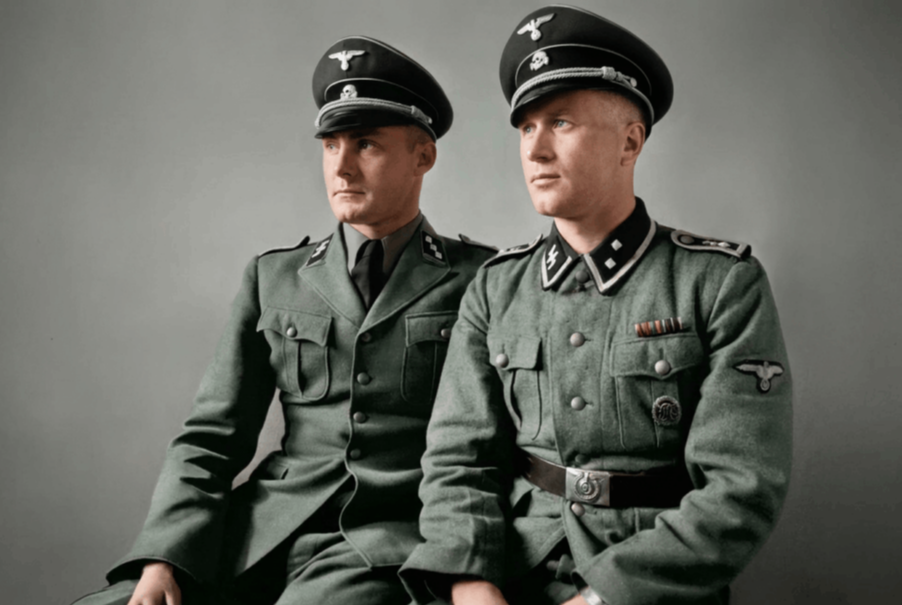
Novel written by Philippe A. Sprey.
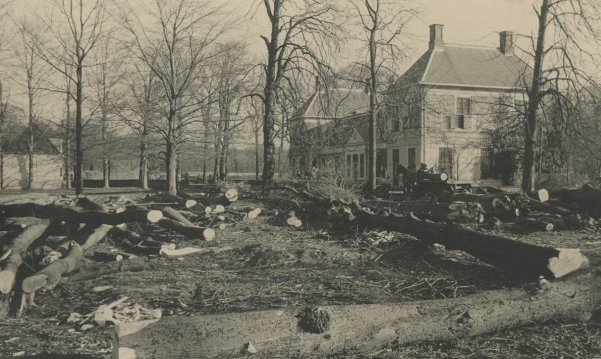
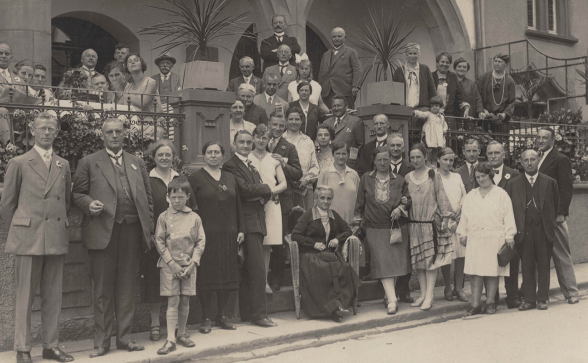
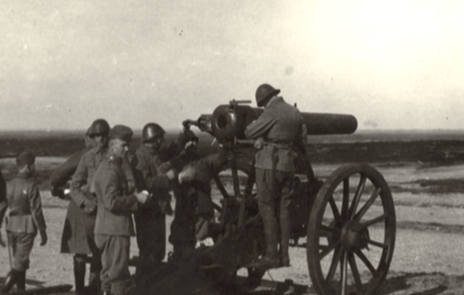
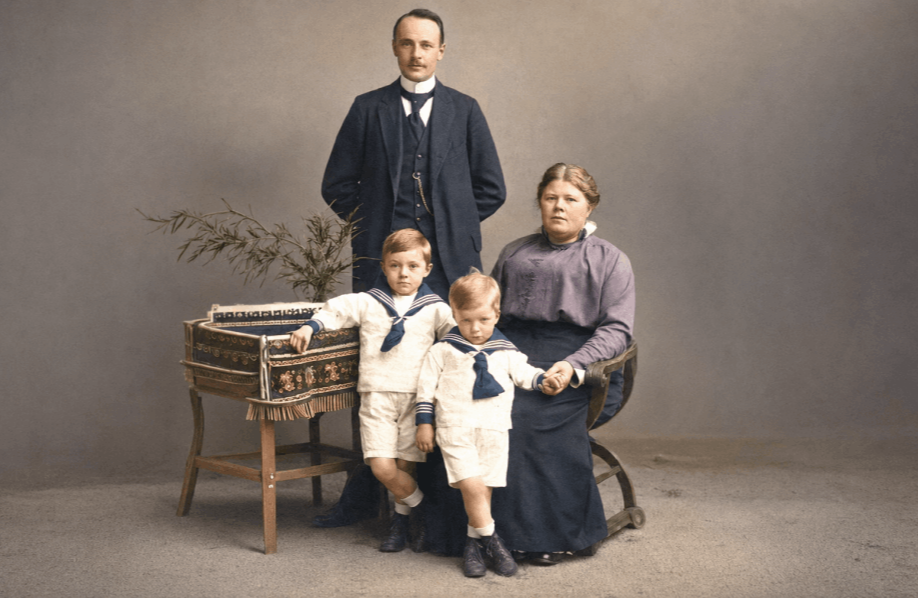
This website when completed, accompanies the novel and will contain photographs, documents, archival material, and references relating to the people, events, and historical context behind the story.
It will offer readers an opportunity to explore the research and source material that formed the book.
War. Ideology. Family. Unanswered Questions.
A Historical Novel Based on True Events
JJBS
JJBS: The Enigma of Jan Jacobus Bate Sprey is a historical novel based on true events, tracing the life of a Dutch boy whose path leads from family, childhood, and ordinary ambition into the dark machinery of war, ideology, and the SS.
Born into a respectable Dutch family, Jan Jacobus Bate Sprey — known within the family as Co — grows up in a world already shadowed by loss, discipline, social pressure, and political unrest. As Europe changes around him, so too does his sense of identity and belonging. What begins as youthful conviction gradually becomes commitment, and commitment becomes entanglement.
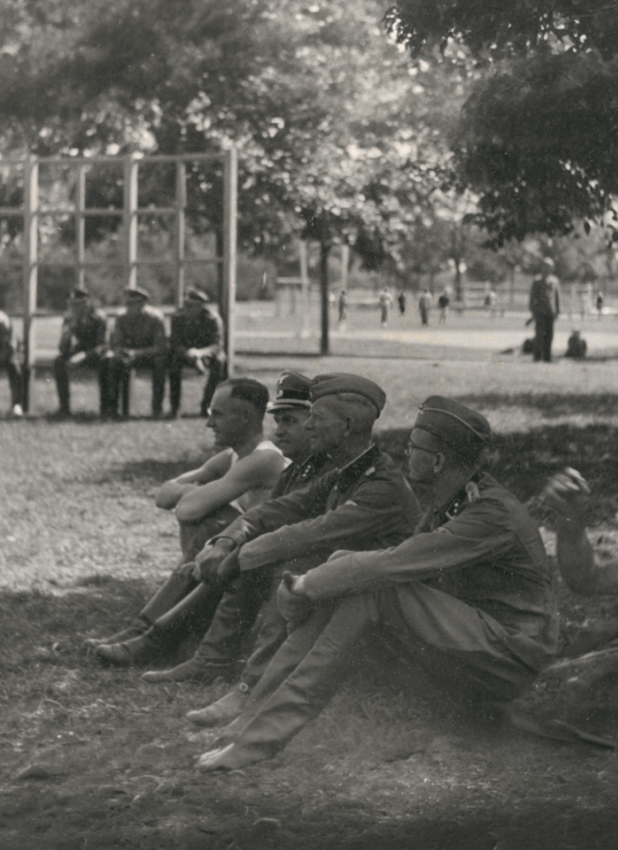
The novel follows Co from pre-war Holland through his involvement with the Dutch National Socialist movement, his military service, his time in Germany, the Eastern Front and his eventual role within the SS. His journey places him near some of the most dangerous structures of Nazi power, including intelligence, recruitment, and covert operations in occupied Europe.
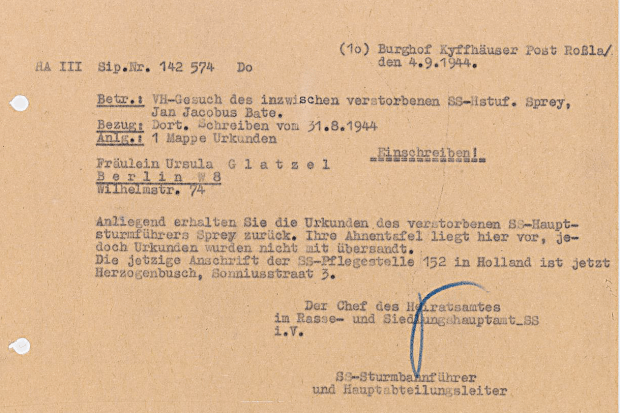
At the centre of the story is not only what Co did, but what remains uncertain. His official death in The Hague in 1944 left behind documents, rumours, family silence, and unanswered questions. Was his end exactly as recorded, or did the truth become another casualty of war?
Drawing on family photographs, historical records, official documents, and long-buried fragments, JJBS explores the uneasy territory between fact and memory. It is a story of war, ideology, family, ambition, betrayal, and mystery — and of one man whose life still resists a simple answer.
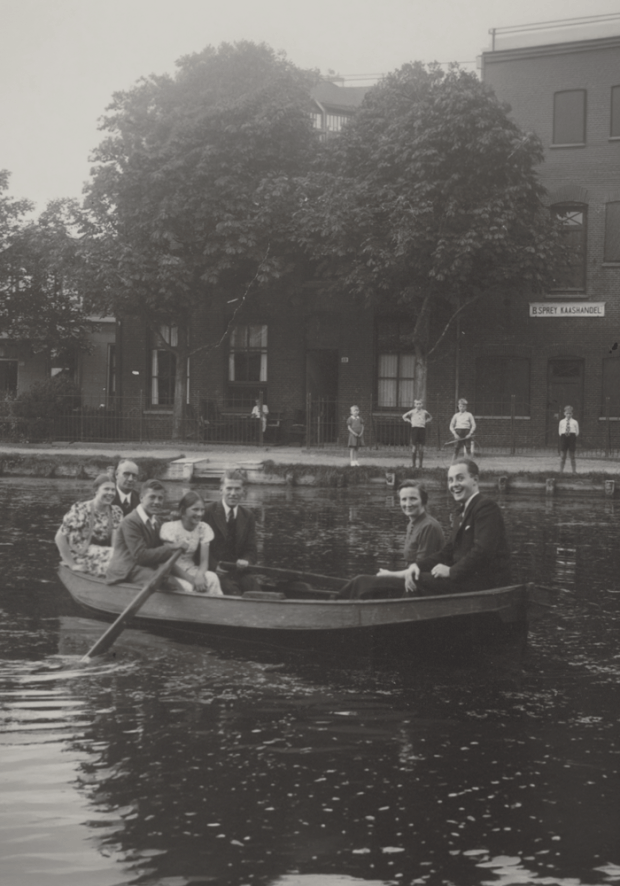
Forward by Author- Phil Sprey
Why?
Why write this book? It’s a fair question.
My reasoning is as follows: when the world was tossed into chaos during the pandemic called COVID in 2020, and New Zealand’s Government implemented one of the harshest “stay at home” regimes, the one thing there was plenty of, was time to think, imagine and explore new pastimes. I did.
I was semi-retired from the world of entertainment by then, and because my company operated from an office in my home, I was already used to working alone with my own routines and tools. In some ways lockdown life suited me better than it did people who suddenly found themselves stranded without structure or purpose. For them, it was isolation. For me, it was more like being told the outside world had been cancelled and I was allowed to get on with tasks I kept postponing.
I had been toying with the possibility of writing a book for some time. Friends and associates had encouraged it. The obvious candidate was a semi-autobiographic excursion into the entertainment world, mixed with an unusual upbringing, travel, work experiences, and a mountain of interesting events sprinkled over the top. I may still revisit that in the future. But something at the back of my mind kept shelving it. Not rejecting it exactly — just pushing it aside, as if another story was standing behind it, waiting its turn.
Then, early one day in May 2020, I decided to tidy up the thousands of files that had coagulated on my computer(s) and hard drives. An almost insurmountable task. Among the megabytes of old data was the Sprey family photo collection.
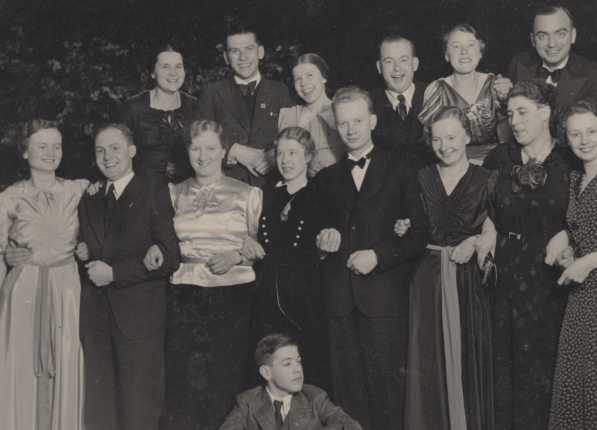
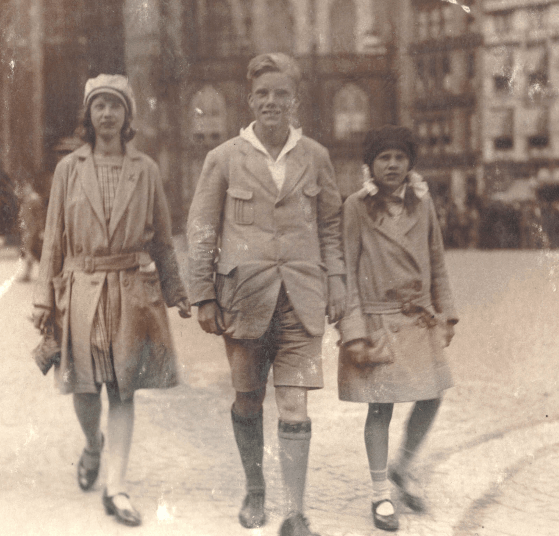
Years ago, I had gathered the many albums that had survived — many thanks to my sister, Yvonne, who protected them over the years — and scanned each page meticulously so that each of my children had, at the very least, a digital record of their lineage. Luckily, my parents and grandparents on both sides of the family were prolific photo takers. Both my parents, Hans and Anneke, passed away when I was 12 in 1964, so many of these images are a warm reminder of them. They also fill in gaps that would otherwise have been lost for good.
While going through the Sprey side of the albums I came across a small number of photos of my father and his brother as boys. Then a handful of later images: the brother in military uniform, and then two images of him in a German SS uniform.
That was the moment the “other story” stepped forward.
In our home, when I was a child, my father’s brother was never mentioned, never discussed. Only once did my father name him directly — he said his brother had been in the German Army and that he had died during the war. Nothing else. No explanation, no context, no room for follow-up questions. Just a sentence dropped like a door being shut.
At first, what I felt was plain curiosity. The kind you can ignore for years because life is busy and the present is noisy. But give a person enough quiet days in a row and the mind starts tidying its own attic. Old names reappear. Half-told family stories wobble to the surface. Questions you assume you’ll ask “one day” suddenly feel urgent, because you realize how many “one days” you’ve already spent.
In my case, the name was Jan Jacobus Bate Sprey — my uncle. In the family, he was often referred to as “Co”. I was born long after the war, and the silence around him was total: not a silence of forgetfulness, but a silence with intent. There were reasons for it. Some personal. Some generational. Some belonging to a time when speaking could still carry consequences.
Curiosity got the better of me, and with a rush of blood to the head, I started to lift the lid on who he was. Who was JJBS? Who was “Co”? How does a man go from the family photo albums to an SS uniform — and then vanish into family taboo?
That is the point where many people decide the best course is to leave the matter alone. But leaving it alone is also a choice, and it comes with its own cost. Silence doesn’t remove a story; it preserves it. It turns a life into rumour, into caricature — monster or martyr — and leaves the next generation to carry the weight without being allowed to examine it.
This book is my refusal to accept that arrangement.
It is not written to rehabilitate my uncle, nor to condemn him by convenience. It is written because I wanted to know who he was before the war, who he became during it, and how that change occurred. I wanted to understand what a particular Dutch man, from a particular Dutch family, did when ideology arrived dressed as certainty — and what it did to him in return.
Once I began looking, the search took on its own momentum. Records emerged. Names and places. Letters. Official files. Traces that could be followed and tested. Each new piece of information provided two scenarios at once: it revealed, and it complicated. It was rarely neat. It was rarely comforting. But it was real.
I am not a historian by trade. I am an investigator of my own family’s shadows. I have tried to treat the material with discipline: to distinguish what can be proved from what is inferred; to label family lore as lore; to separate what a document states from what a reader may wish it to mean. Where I am uncertain, I say so. Where sources contradict one another, I leave the contradiction visible rather than smoothing it away for the sake of a clean narrative.
Some readers will find parts of this book difficult. That is expected. I did too. But I have come to believe that the only honest way through such history is straight through it: reading what exists, accepting what it implies, and resisting the urge to tidy it for comfort.
If there is any dedication here, it is not to heroism. It is to truthfulness — and to those families who inherited war not as a medal, but as a question.
Who was JJBS?
Philippe (Phil) A. Sprey is a New Zealand-based writer, creative director, and former concert and events producer whose career has moved through entertainment, major public events, theatre, hospitality, media, exhibitions, and cultural projects.
Born into a post-war immigrant Dutch family shaped by war, migration, separation, silence, and reinvention, Phil grew up with fragments of family history that were never fully explained. Those fragments — photographs, names, rumours, absences, and unanswered questions — would later become the foundation for JJBS: The Enigma of Jan Jacobus Bate Sprey.
Before turning to this deeply personal historical project, Phil built a long and varied career. He served in the Royal New Zealand Air Force before training as a City & Guilds-certified chef, working in hotels and leading restaurants in Wellington. From there, his professional life took many turns: nightclub owner, disc jockey, private investigator, engineering company owner, talkback radio host, theatre and cinema manager, publicist, promoter, and event producer.
He went on to become a prominent figure in New Zealand’s entertainment and events industries. Through Capital C: Concerts & Events, he was involved in producing and promoting concerts, exhibitions, civic events, cultural projects, and large-scale public entertainment across several decades. His work brought together audiences, artists, sponsors, venues, media, and public institutions, often on projects where history, spectacle, storytelling, and public memory overlapped.
That experience — working with stories, audiences, performance, spectacle, public memory, and historical presentation — helped shape the way he approached the story of Jan Jacobus Bate Sprey. What began as family research gradually became a wider investigation into war, ideology, loyalty, ambition, identity, silence, and the damage left behind when truth is buried or withheld.
Drawing on historical records, family material, photographs, documents, and years of research, Philippe has written a historical novel based on true events — not to excuse, simplify, or sensationalise, but to explore a difficult story with honesty, restraint, and humanity.